Mann Ki Baat

A monthly radio address to the nation

Mann Ki
Baat

Since October 2014, a short monthly broadcast has been used to speak directly to citizens — not on policy announcements, but on everyday initiatives, achievements and ideas sent in by the public. This page sets out plainly what the programme is, how it is put together, and what it has covered.

Promotional graphic for the Mann Ki Baat programme
First aired
3 October 2014
Frequency
Monthly, usually the last Sunday

The programme in one place

Full name
Mann Ki Baat — roughly, "words from the heart"
Format
A short spoken-word radio address, typically 25–30 minutes
Primary broadcaster
All India Radio, simulcast on Doordarshan and private broadcasters
Languages
Aired in Hindi with translations into regional Indian languages and several foreign languages
Online home
mygov.in, with archives, transcripts and a citizen-ideas forum for upcoming episodes
Latest episode on record
138th episode, aired September 2026

What the programme actually is

Mann Ki Baat is described by its own organisers as the government's flagship monthly radio programme, through which citizens across the country are addressed on "inspiring stories, innovative ideas, and people-led initiatives that are driving positive change." It is built around everyday achievement rather than government announcements as such.

Each episode is short — closer to a radio essay than a speech — and is recorded for broadcast rather than delivered live. Topics are drawn in large part from letters, recordings and online submissions sent in by members of the public ahead of time, which is also why the programme's official site runs an open forum for citizens to suggest subjects for the next episode.

Because it goes out on radio and television at the same time, in Hindi with translation into regional and some foreign languages, its intended audience is broad: domestic listeners across India as well as overseas Indian communities who pick it up through simulcast or online recordings.

In short: a monthly, low-key radio segment on ordinary achievement and civic initiative, built in large part from material the public itself sends in.

Recent episodes

Each episode is numbered from the first broadcast in October 2014. The most recent on record at the time of writing:

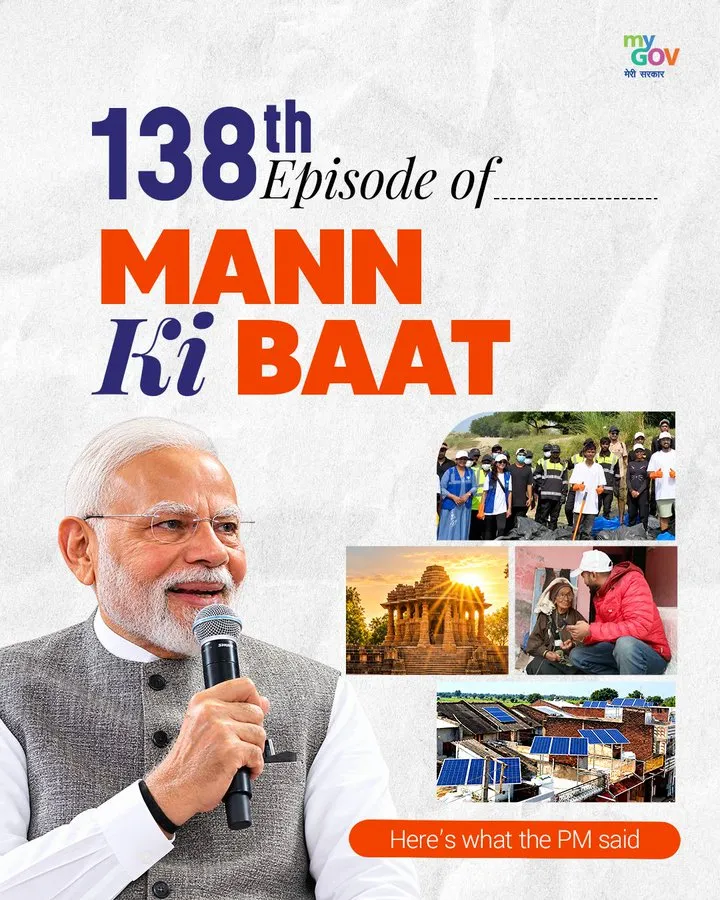
138th
September 2026 — the most recent episode listed on the programme's official archive.
137th
August 2026.
136th
July 2026.
135th
June 2026.
Promotional graphic for the September 2026 episode
The official graphic for the 138th episode, September 2026.

The themes it keeps returning to

The programme does not stay on one subject. Over its run it has returned to a recognisable set of themes.

Grassroots achievement People, not policy

Stories about individuals or small local groups — a village, a school, a self-help group — who solved a practical problem on their own initiative, held up as examples worth noticing rather than as beneficiaries of a scheme.

Sustainability and the environment Local environmental effort

Water conservation, waste management, tree planting and similar local efforts, usually framed around a specific place or community rather than a national target.

Culture and heritage Tradition and craft

Traditional crafts, festivals, languages and historical sites, often tied to an appeal to visit, document or support a particular local tradition.

Innovation Small-scale invention

Low-cost inventions and start-ups, particularly ones developed by students or in small towns, presented as evidence of practical problem-solving outside the big cities.

National moments Shared occasions

Sporting wins, space missions, festivals and anniversaries get a mention when they fall in the relevant month, tying the programme loosely to the news cycle.
How it reaches people

The programme is built to be heard rather than read: broadcast simultaneously on radio and television, then kept online afterwards as audio, video, transcripts and short clips for social media. The official site, run by the MyGov platform, is the main place all of this is archived in one spot.